
- Call Us: +15672810466
- Email:[email protected]
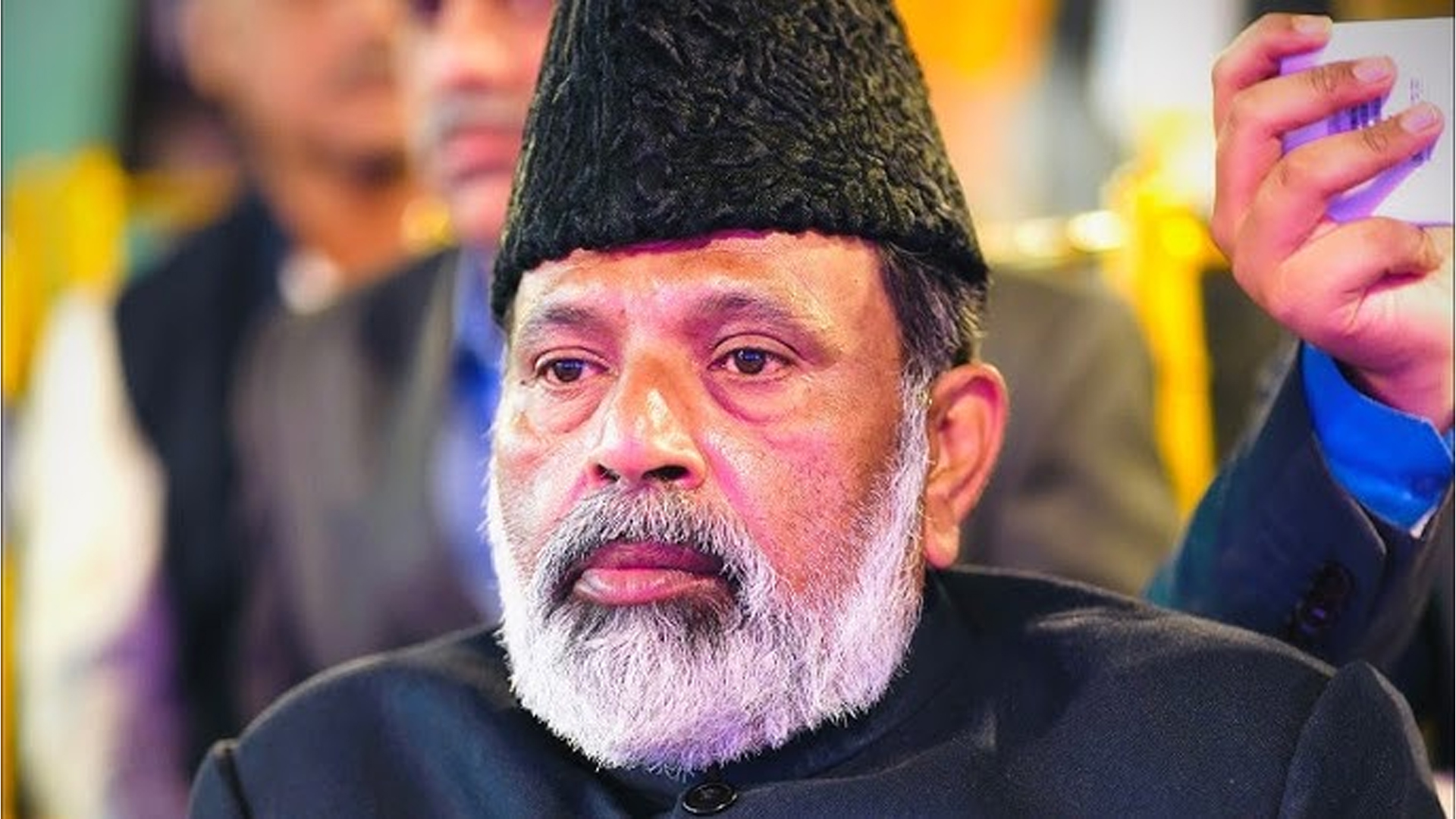
Syed Zia Alvi — a Qalandar soul who is no more!
Dr. Jahangir Hasan
Khairabad—true to its name—is a fertile and illustrious town located in the Sitapur district of Uttar Pradesh. It is a land that for centuries has been a cradle of scholars and saints, philosophers and litterateurs, poets and physicians. The very atmosphere of this town is permeated with the fragrance of knowledge, refinement, and culture. Syed Zia Alavi belonged to this same town, endowed with a rich scholarly, literary, historical, and cultural legacy. His personality was a graceful blend of Khairabadi dignity and Awadhi delicacy. His scholarly visage, straight nose, and broad forehead were clear signs of his intelligence, composure, and love for learning. In dress and demeanor, he appeared as a beautiful synthesis of the classical and the modern—at times a traditional poet in an Aligarh-style sherwani, and at other times, in a coat and tie, evoking the image of a seasoned, dignified, and professional corporate personality.
Syed Zia Alavi was a distinguished torchbearer of the Safaviyya–Minaiyya Sufi order, yet his understanding of Sufism was entirely free from prevalent rituals and ostentatious khanqah practices. He was strongly opposed to the display and showmanship carried out in the name of pir–murid relationships. To him, Sufism was not merely a matter of rituals, but a comprehensive vision encompassing knowledge, practice, ethics, and magnanimity. Alas, he has left the world of Khairabad feeling desolate. When the news came on 18 January 2026 that Syed Zia Alavi had departed this mortal world due to a heart attack, a momentary state of stunned disbelief prevailed. Yet before the Divine Will, who can claim authority, for:
“Who has ever found deliverance from death?”
His given name was Muhammad Zia. Initially, he adopted the pen name “Zia Khairabadi,” which later evolved into “Zia Alavi.” As a poetic takhallus, he sometimes used “Zia” and at other times “Alavi.” Being from a family of Syeds, he came to be known as Alavi. He was born on 7 June 1964 in Khairabad. His forefathers remained associated with landholding for nearly eight centuries, but after the Partition of India this system fell into decline and everything gradually disintegrated. His revered father, Syed Mubeen Alavi, was a poet of high stature, whose well-known collection Pairahan-e-Harf is held in great esteem among literary circles. This clearly indicates that Syed Zia Alavi inherited the art of poetry, which he further refined through his own hard work, extensive reading, and sustained intellectual discipline.
He possessed exceptional mastery over Khairabadi studies. The history of Sufism, the eminent figures of Khairabad, and the scholarly and spiritual narratives of this region—he narrated all of these with a distinctive grace and captivating style. His memory was extraordinary. He himself enjoyed respect and distinction among scholars and literary figures, and he generously appreciated the academic and literary achievements of others. In reverence for elders and kindness toward juniors, he held a prominent place among his contemporaries, reflecting his noble character and breadth of heart.
Syed Zia Alavi was a poet of high caliber whose voice resonated in national and international mushairas. His poetry was not merely a craft of words; it was a mirror of spiritual insight and intellectual depth. He did not simply compose verses; he gave full expression to human thought, feeling, and experience. His Awadhi poetry stands as eloquent testimony to his cultural roots and deep attachment to the soil. Essentially a poet of the ghazal, he preserved its classical delicacies and traditions while harmonizing them with the intellectual and social experiences of the modern age. Technical maturity, clarity, fluency, and a refined arrangement of words are distinctly evident in his poetry.
He was a strict adherent to the established principles of language and expression, as well as to cultural values. He possessed the rare skill of presenting the bitter realities of society and the turmoil of the times through the sweetness of his diction and his distinctively gentle, balanced tone. While his poetry often appears as an embodiment of softness, subtlety, and tenderness, when the occasion demanded, he also demonstrated remarkable mastery in sharp and meaningful expression. From beginning to end, he remained under the influence of Sufism; hence, alongside the color of romantic lyricism, the hue of mysticism shines in his work with full brilliance. His Sufi poetry, in particular, is deeply popular among people of the heart and is read and recited with devotion in khanqah circles.
Among Syed Zia Alvi’s published poetry collections, Qaus-e-Qazah and Qausain hold a prominent place. Qaus-e-Qazah appeared in October 2003, while Qausain was published in May 2009. In 2016, his edited volume Zikr-e-Saad was published, comprising the biography and discourses of Sheikh Saaduddin Khairabadi, the foremost khalifa of Makhdoom Shah Meena Lucknowi. This biographical and spiritual compilation vividly reflects his deep and enduring connection with the masters of Sufism. It is also noteworthy that his mother was the daughter of Janab Sajad Husain Khairabadi, the former sajjada-nashin of Sheikh Saad Khairabadi, while Syed Zia Alavi himself was the sajjada-nashin of the shrine of Qazi Budhan Unnawi (the father of Sheikh Saad). In the khanqah tradition, he was particularly influenced by Sajada Mian, Arif Bhaiyya, and Abu Mian.
In short, Syed Zia Alvi’s sphere of influence was not confined to poetry and literature alone; he also held a dignified and respected position in the realms of Sufism, culture, and ethics. The large presence of people of the heart, as well as scholars and literary figures, at his funeral stands as clear evidence of the love and respect he commanded across all sections of society. He departed this world quietly, yet left behind words, memories, and fragrances that will continue to breathe for a long time, keeping alive the sense of his presence.
Syed Zia Alvi’s life leaves us with the message that true greatness lies not in fame or display, but in knowledge, character, humility, and service to humanity. He was a qalandar who burned within himself and shared light with others. The void created by his passing may never truly be filled, yet his intellectual and spiritual legacy will forever remain alive among us.
May Allah grant him forgiveness, elevate his ranks, and bestow beautiful patience upon his family and loved ones.
Indeed, may he be granted mercy—what a truly free-spirited soul he was. (Ameen)
© Copyright 2024, All Rights Reserved By ACNA