
- Call Us: +15672810466
- Email:info@auliyacouncil.com
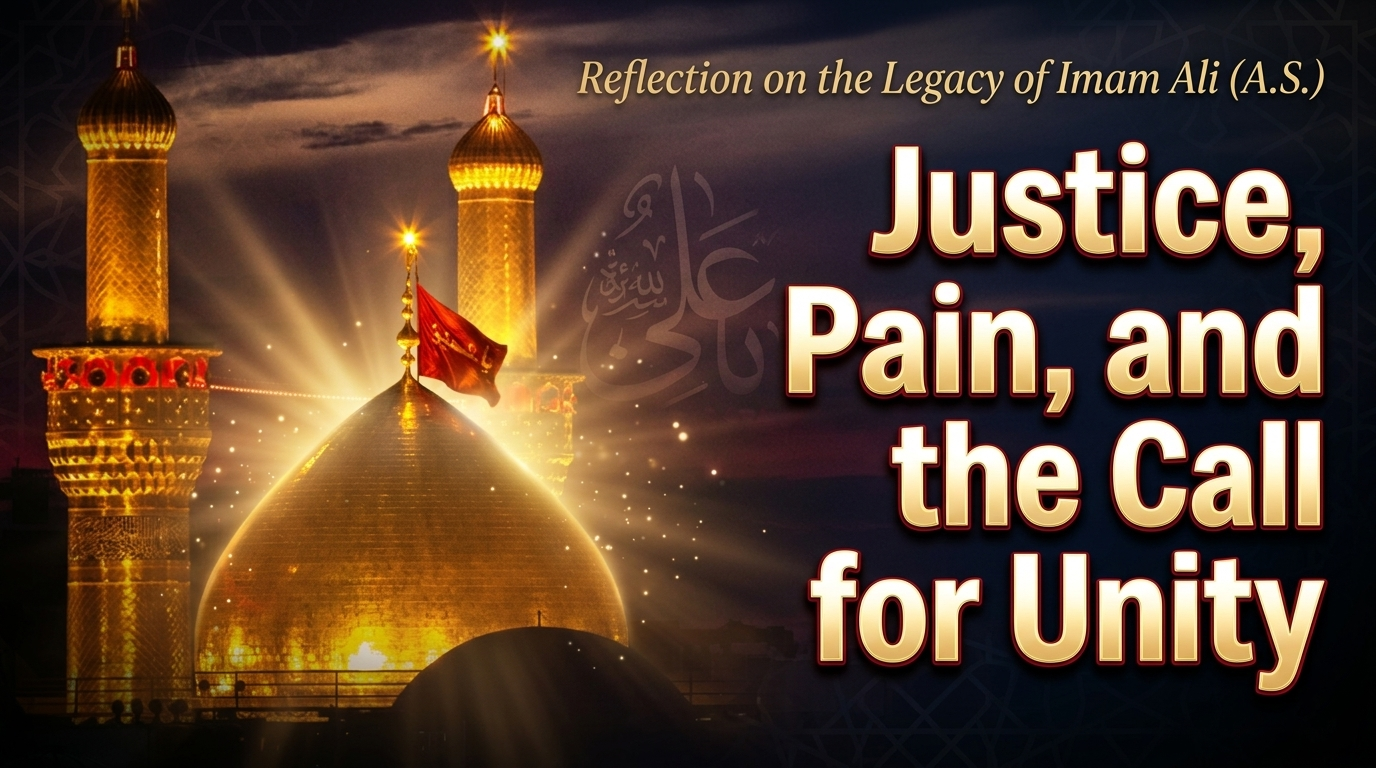
This article is based on a video address delivered by Dr. Mehdi Kazmi at Masjid Babu Zulfiqar on the occasion of Youm-e-Shahadat Hazrat Ali (A.S.), 21st Ramadan.
The 21st of Ramadan is one of the most solemn days in Islamic history. It marks the martyrdom of Imam Ali (A.S.), a towering figure whose life continues to inspire millions across the world. For many believers, this day is traditionally observed as a day of mourning and remembrance. However, while the sorrow of his martyrdom remains deeply felt, it is also a moment to reflect upon the enduring legacy of Imam Ali (A.S.)—a legacy rooted in justice, moral courage, and unwavering commitment to truth.
Imam Ali (A.S.) is not remembered merely as a historical leader but as a symbol of ethical integrity and principled leadership. His life established a moral framework for standing against injustice and defending human dignity. Through his teachings and actions, he shaped the identity of those who seek to uphold honesty, fairness, and compassion. For many, Ali represents the conscience of humanity—the courage to defend what is right even when the world stands in opposition.
At the same time, reflection on the legacy of Imam Ali (A.S.) also brings to the surface a deeply human emotion: anger at injustice. Anger, when rooted in moral concern, becomes a response to the betrayal of fundamental human values. Across history and even today, communities continue to experience suffering, oppression, and betrayal. Such injustices are not limited to any single religion, region, or nationality; they affect ordinary people whose only aspiration is to live in peace and dignity.
In recent days, the realities of war and conflict have once again reminded the world of the fragility of human life. Witnessing violence and suffering often produces a profound emotional response—sadness, heartbreak, and a sense of moral responsibility. In such moments, many people turn inward toward reflection and prayer, seeking solace and guidance from spiritual traditions that have long provided comfort in times of hardship.
Within Islamic tradition, especially in communities deeply connected to the memory of the Ahlul Bayt, lamentation and supplication form an important part of spiritual expression. These practices allow believers to articulate grief, hope, and longing for justice while drawing strength from the examples of Imam Ali (A.S.), Imam Hussain (A.S.), and Lady Zainab (A.S.). The remembrance of Karbala and the sacrifices of the Prophet’s family has remained a source of moral resilience for centuries.
For over fourteen centuries, the names of Imam Ali (A.S.) and Imam Hussain (A.S.) have symbolized resistance against tyranny and the defense of truth. The message of Karbala teaches that justice must be upheld even in the face of overwhelming adversity. Through gatherings of remembrance, mourning rituals, and acts of devotion, generations have kept alive the ideals of sacrifice, faith, and moral responsibility.
Yet the present moment raises difficult and painful questions. Around the world, conflicts continue to cause immense human suffering. From Gaza to Iran and Pakistan, communities face the harsh realities of violence and instability. These circumstances remind us that the struggle for justice and human dignity remains unfinished. The legacy of Imam Ali (A.S.) calls believers not only to mourn past tragedies but also to recognize contemporary injustices and respond with moral clarity.
In the face of such challenges, the example of the Ahlul Bayt provides both spiritual refuge and ethical guidance. Imam Hussain (A.S.) stands as a timeless guardian of the oppressed, while the courage of Lady Zainab (A.S.) represents the power of truth in the face of tyranny. Their memory serves as a reminder that faith must translate into action—into compassion for the suffering and solidarity with those who endure oppression.
Ultimately, the remembrance of Imam Ali (A.S.) is not only an act of mourning but also an affirmation of principles. His life teaches that justice, integrity, and unity are essential foundations for any society that seeks to uphold human dignity. In times when moral values appear threatened, communities are reminded of the importance of standing together with one voice.
The message of Imam Ali (A.S.) continues to resonate across generations: truth must be defended, injustice must be challenged, and humanity must remain united in its pursuit of justice. Remembering his legacy on the 21st of Ramadan is therefore not only an act of remembrance but also a call to conscience—urging people to uphold the ethical principles that define both faith and humanity.
© Copyright 2024, All Rights Reserved By ACNA