
- Call Us: +15672810466
- Email:info@auliyacouncil.com
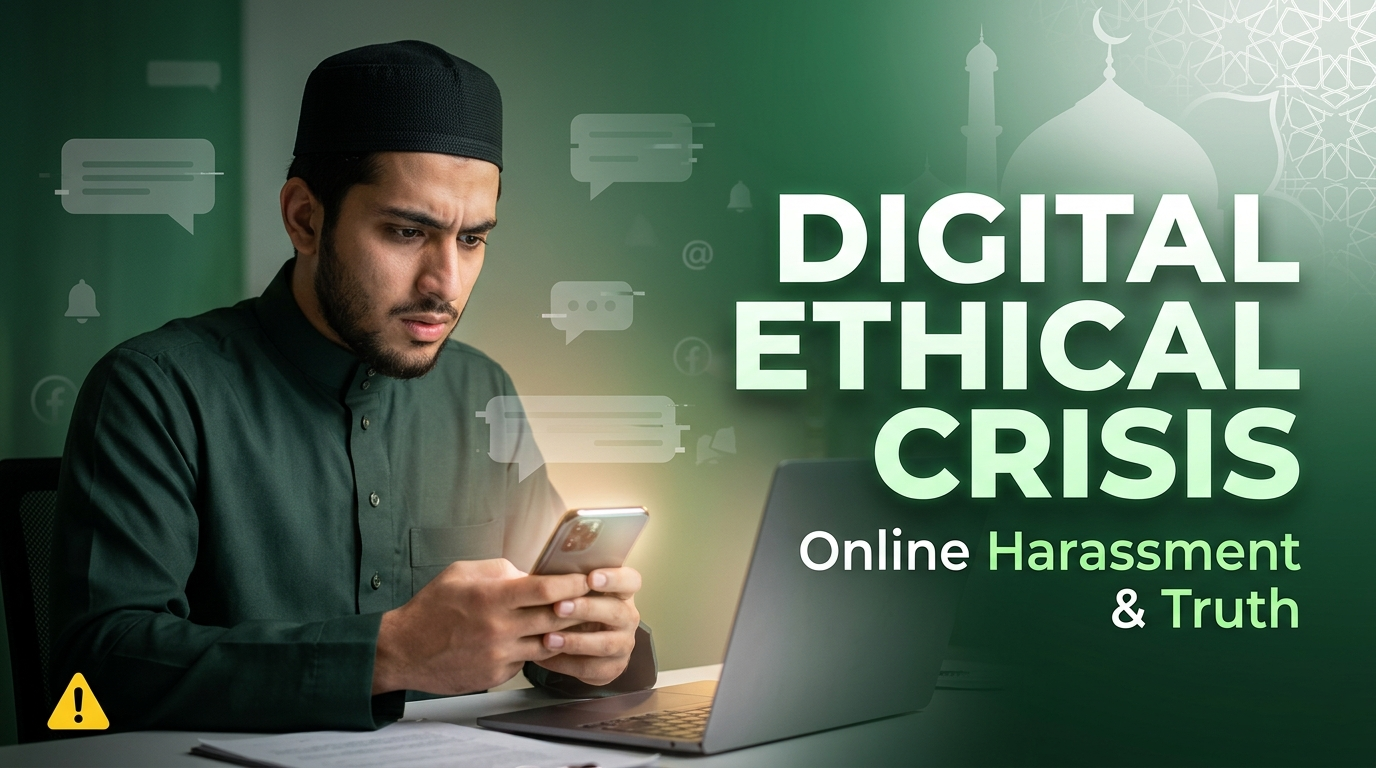
In today’s digital age, while the internet, social media, and electronic platforms have made human life easier, their misuse has also given rise to serious moral, religious, and social problems. Among these, one of the most dangerous issues is online harassment, where individuals use digital means to attack the dignity, honor, and privacy of others. This behavior is not merely a legal or social offense; in Islamic law, it is considered a grave sin, as Islam places great importance on the protection of human dignity and honor. Some people assume that hiding behind a screen conceals their identity, actions, and sins; however, nothing is hidden from Allah, and no secret remains concealed from Him.
Islam teaches us not to interfere in the private matters of others, whether in real life or in the online world. Hurtful messages, false accusations, defamation, deceitful communication, and the spread of inappropriate images are all tactics of evil that promote corruption in society. The Prophet Muhammad ﷺ described a true believer as one from whose tongue and hands others remain safe. In today’s context, this teaching extends beyond physical interactions to include our use of mobile devices, chats, emails, and social media. Every action performed in the digital world is being recorded as part of one’s deeds, and on the Day of Judgment, a person’s own limbs will testify to what they used to do.
Similarly, online blackmail and digital defamation represent a compounded crime involving oppression, betrayal, and deception. Perpetrators often exploit trust, confidentiality, and emotions to harm others. Publishing private conversations, leaking images, spreading false information, or using social media to damage someone’s reputation are extremely serious offenses. Such actions not only affect individuals but also create fear, mistrust, and moral decay within society. Islam strongly warns against those who seek to spread immorality among believers. Therefore, it is the duty of every Muslim not only to refrain from such acts but also to safeguard the honor, privacy, and dignity of others.
The psychological and social impacts of online harassment are deeply destructive. Victims often suffer from fear, anxiety, stress, and depression. At times, a single malicious message or continuous digital abuse can severely damage a person’s peace of mind, confidence, and social relationships. It is unfortunate that some individuals easily violate the dignity of others, yet cannot tolerate even the slightest harm to their own or their family’s honor. This contradiction highlights the unjust and unethical nature of such behavior. A believer must remain conscious that even behind a silent screen, Allah’s watchful presence observes every glance and knows every hidden intention.
Furthermore, it is essential for parents to closely monitor their children’s engagement with electronic games and digital activities. Islam permits recreation within reasonable and ethical limits; however, any form of entertainment that harms a child’s intellectual, moral, physical, or educational development is unacceptable. Many electronic games negatively impact children by promoting isolation, aggression, violence, weak eyesight, restlessness, and detachment from reality. When a child becomes absorbed in a virtual world, their connection to family, social values, and academic responsibilities weakens. Therefore, parents must provide healthy, constructive alternatives that nurture their child’s natural abilities and ensure balanced development.
In conclusion, online harassment, blackmail, defamation, and irresponsible digital behavior are not merely modern challenges; they pose a serious threat to faith, morality, and social harmony. Likewise, allowing children unrestricted exposure to harmful digital content reflects negligence. It is imperative that we align our digital lives with the consciousness of God, Islamic ethics, human compassion, and social responsibility. Whoever refrains from unlawful and doubtful matters for the sake of Allah will be granted something better in return. Therefore, we must purify our speech, our actions, our messages, and our online conduct, while raising our children with awareness, balance, and moral insight.
© Copyright 2024, All Rights Reserved By ACNA