
- Call Us: +15672810466
- Email:info@auliyacouncil.com
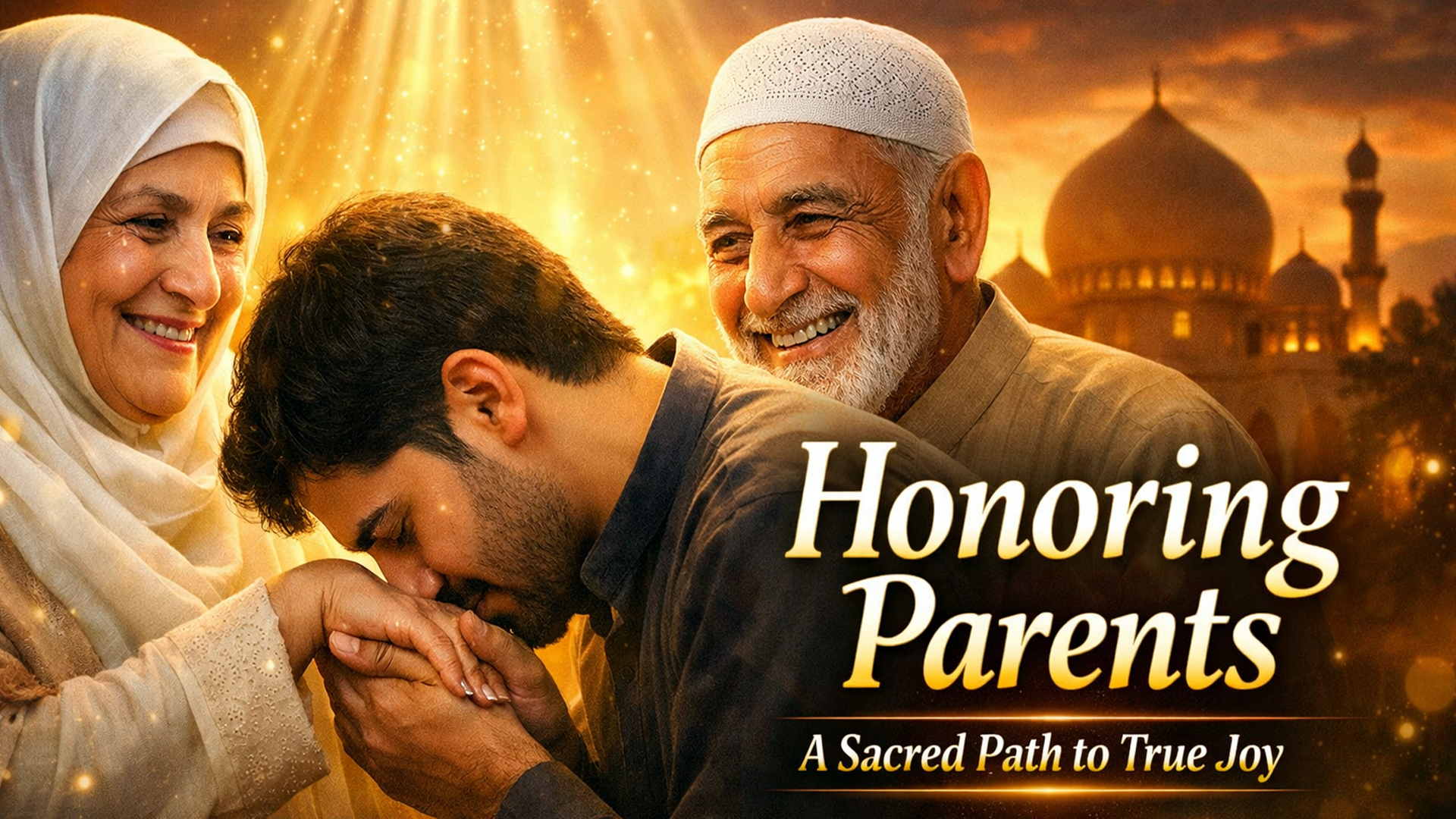
In the moral and spiritual framework of Islam, honoring one’s parents stands as one of the most profound and essential principles of human conduct. It is not merely a social obligation but a deeply rooted spiritual duty that connects a believer directly to the pleasure of Allah. Especially in moments of joy and celebration—such as Eid—the true essence of happiness is incomplete without recognizing, serving, and honoring those who gave us life.
Parents are not only the means of our physical existence; they are the foundation of our emotional, moral, and spiritual upbringing. They are the first teachers, the silent sacrificers, and the constant supporters who shape our identity long before we understand the world. In times of weakness, they become our shelter; in moments of confusion, our guidance; and in hardship, our greatest comfort. The mother embodies unconditional love, mercy, and nurturing care—she is the origin and refuge of life. The father represents strength, wisdom, and protection—the pillar upon which stability rests. Together, they form the very axis of our existence, the “Kaaba of the soul,” around which our emotional and spiritual life revolves.
Islam elevates the status of parents to a مقام of immense honor by directly linking their obedience with the worship of Allah. The Qur’an declares with clarity and emphasis:
“And your Lord has decreed that you worship none but Him and that you show kindness to parents.”
This divine command establishes that devotion to parents is inseparable from devotion to Allah. Their satisfaction becomes a gateway to divine pleasure, while their displeasure may lead to spiritual loss. It is a sacred covenant—a lifelong commitment of gratitude, humility, and unwavering respect.
The Prophetic tradition further reinforces this principle through powerful examples. The obedience of Prophet Ismail (A.S.) to his father, Prophet Ibrahim (A.S.), stands as a timeless symbol of sacrifice and submission. Similarly, Uwais al-Qarni attained extraordinary spiritual rank not through public deeds, but through his unmatched devotion to his mother. The Qur’an also praises Prophet Yahya (A.S.) for his humility and dutifulness toward his parents, presenting him as a model of righteousness and اخلاق.
The Messenger of Allah ﷺ emphasized the weight of this responsibility with a striking warning:
“Whoever finds his parents in old age and does not enter Paradise, let his nose be rubbed in dust.”
This hadith highlights that serving one’s parents, especially in their later years, is among the greatest opportunities for attaining Jannah. Their prayers become a fortress against trials, their رضا a source of barakah, and their presence a blessing that should never be taken for granted.
Among parents, the mother holds a uniquely elevated مقام. The Prophet ﷺ, when asked about who deserves the best companionship, replied: “Your mother”—three times before mentioning the father. This repetition signifies her unparalleled sacrifices—the pain of childbirth, the sleepless nights, and the endless care she provides without expectation. Her pleasure is deeply tied to Allah’s mercy, and her دعا carries a special acceptance that brings نور and success into a believer’s life.
The father, too, commands immense respect and honor. He is the provider, the protector, and the silent architect of a child’s future. His sacrifices often go unnoticed, yet they form the backbone of stability and growth. Respecting the father is not only a moral duty but an acknowledgment of his lifelong struggle and dedication. Supporting him, especially in his old age, opens doors of acceptance and divine reward.
Ethically, Islam teaches that kindness to parents must be expressed not only through actions but also through words and intentions. Even the slightest expression of disrespect—such as a harsh tone or impatience—is discouraged. The Qur’an instructs believers to speak to their parents with gentleness and humility, lowering the “wings of mercy” before them. It further teaches a beautiful supplication:
“My Lord, have mercy upon them as they raised me when I was small.”
This dua reflects a continuous bond of love and gratitude that transcends time. Even after parents have passed away, the duty of honoring them does not end. It continues through prayers, acts of charity on their behalf, and maintaining ties with relatives and friends they cherished.
Neglecting parents, on the other hand, leads to a decline in spiritual rank and blessings. A heart that fails to honor those who sacrificed everything for it risks losing its connection with mercy and compassion. Conversely, a heart that serves parents with sincerity finds itself elevated, purified, and closer to Allah.
Ultimately, honoring parents is not limited to occasional gestures; it is a lifelong journey of love, patience, and humility. It is the hidden secret behind true joy, the adornment of celebrations like Eid, and a means of attaining both worldly peace and eternal success. Through خدمت, احترام, and دعا for our parents, we fulfill not only a human responsibility but a divine command—one that leads to نور, برکت, and the رضا of Allah in this life and the hereafter.
© Copyright 2024, All Rights Reserved By ACNA