
- Call Us: +15672810466
- Email:info@auliyacouncil.com
Dr Afra Jalabi
Religious traditions have always warned human beings against the danger of temptation. In the Qur’anic worldview, temptation is not always an act of open force or visible coercion. It often works through seduction, desire, fear, hunger, power, pride, and the illusion that something outside the human soul can complete it. This is why the Qur’an repeatedly calls humanity back to remembrance, sincerity, gratitude, and moral freedom.
One of the most profound insights in this discussion is that the power of Satan is not primarily coercion, but temptation. Satan promises much but delivers nothing. He creates the illusion that human beings can find immortality, power, satisfaction, and security through external possessions. Yet the Qur’an reminds us that the real dignity of the human being is already within: God has honored humanity, breathed into it from His spirit, and placed it in a position of moral responsibility. When human beings forget this inner honor, they begin searching outward for crumbs while ignoring the treasure already placed within them.
This is where fasting becomes deeply radical. Fasting is not merely abstaining from food and drink; it is a spiritual declaration that a human being does not live by bread alone. By resisting the most basic physical needs, the fasting person learns that survival is not only material. Fasting restores courage, reduces fear, and returns the soul to dhikr — remembrance. It teaches the believer that if hunger and thirst can be overcome, then other forms of temptation can also be seen through and resisted.
The Qur’an also describes the reality of worldly life with striking clarity. In Surah Al-Hadid, life is described as play, amusement, ornament, mutual boasting, and rivalry in wealth and children. It is compared to a beautiful plant that grows after rain, delights the observer, then withers, turns yellow, dries, and crumbles away. This image is not meant to make people hate life, but to awaken them from illusion. The world is not permanent, possessible, or ultimate. It is a passing field of moral testing.
The Prophet Muhammad ﷺ showed how to live in the world without being possessed by it. He had family, community, responsibility, and political authority, yet he never worshipped power or wealth. He became a ruler but did not build palaces for himself. Like Prophet Yusuf عليه السلام, he treated authority as a trust and a means of service, not as a source of ego. This is the Islamic way of “playing the game” of life without becoming lost in it.
Another powerful Qur’anic idea is that the opposite of kufr is not only iman, but shukr — gratitude and acknowledgement. Kufr literally carries the meaning of covering or denying. When a person denies God, he also denies the divine gift within himself. But when a person lives in shukr, he acknowledges the blessings within and around him. Gratitude creates inner fullness, and inner fullness protects the heart from the hunger for endless external possession.
Dhikr, therefore, is much more than a ritual. It is a way of being. It means living in remembrance, returning to oneself, returning to God, and refusing to be swallowed by the race of dunya. When a person remembers that worldly life is temporary, competition loses its grip. Life then becomes a path of humility, discipline, service, and presence.
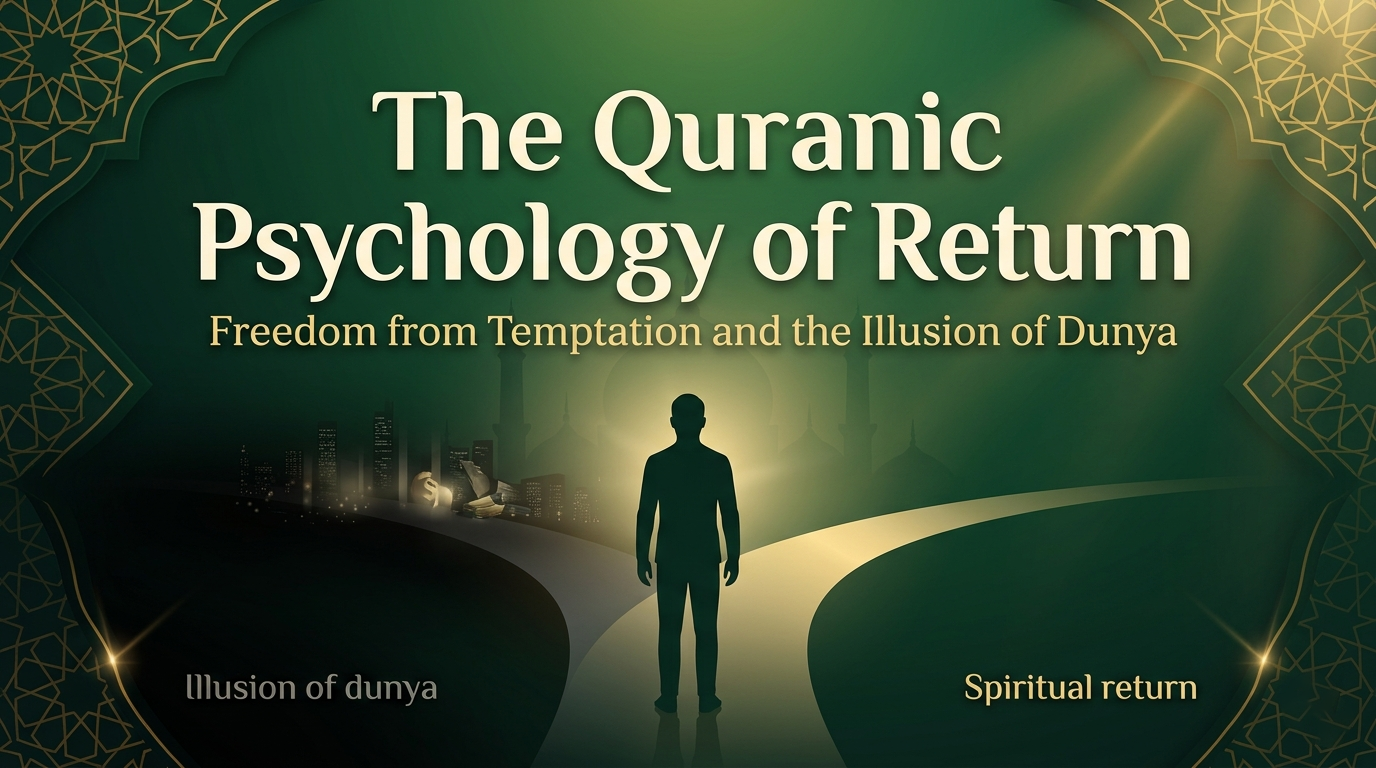
The Qur’an also creates a remarkable psychology of return. It shows scenes of people in the Hereafter begging to be returned to the world so they can do better. At the same time, it reminds us that death is certain and already approaching. This produces a powerful spiritual realization: we are already being given the chance we would one day beg for. We are alive now. We are back now. This moment is the opportunity to repair, to give, to love, to repent, to serve, and to become better.
In this sense, regret is not something to deny. The Qur’an teaches us to examine regret and transform it into renewal. Regret can become a doorway to moral awakening. It can help us ask: What truly matters? What is the price of my soul? What am I running after? What would I do differently if I knew this life was my second chance?
The central message is that human freedom is not found in following every desire, but in becoming free from the desires that enslave the soul. True freedom is remembrance. True wealth is gratitude. True power is service. True return is awakening before it is too late. The Qur’an invites the human being to see through the illusion of dunya, resist the temptations of ego, and live as one who has been given another chance.
© Copyright 2024, All Rights Reserved By ACNA