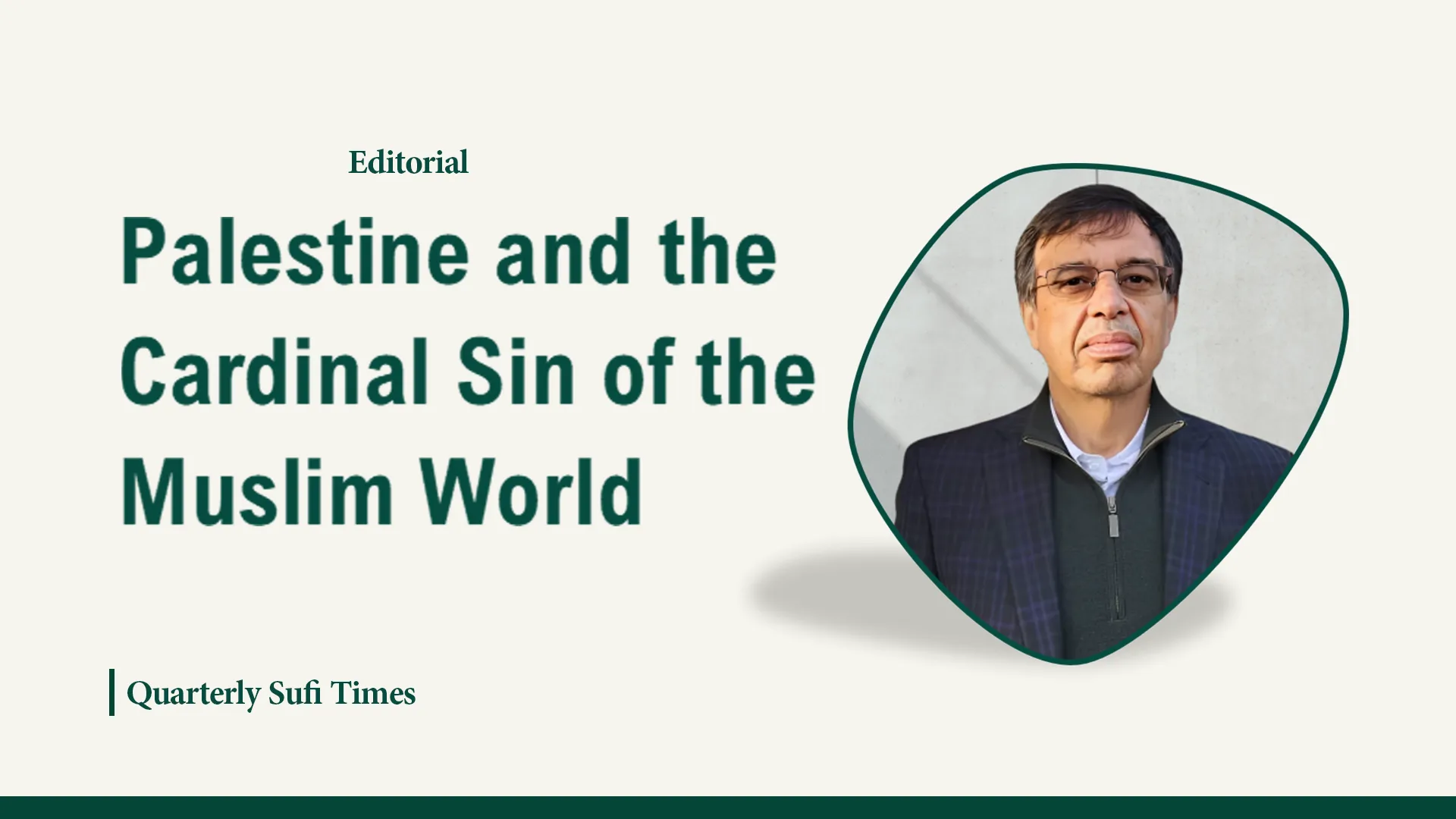
Palestine and the Cardinal Sin of the Muslim World: A Betrayal of the Prophetic Covenant
The Seven Deadly Sins of Christianity—pride, greed, lust, envy, gluttony, wrath, and sloth—have close conceptual parallels in Islamic ethics and Sufi spirituality. Islam understands these failings as diseases of the heart: kibr (pride), hirs (greed), shahwah (unrestrained desire), hasad (envy), isrāf (excess), ghadab (uncontrolled anger), and kasal or ghaflah (laziness or spiritual heedlessness). Though not exact theological equivalents, all describe impulses that undermine justice, moderation, and human dignity. The Quran declares, “Successful indeed is the one who purifies their soul, and doomed is the one who corrupts it” (91:9–10). Accordingly, tazkiyat al-nafs—the purification of the soul—requires self-examination, restraint, humility, gratitude, and compassion.
Abu Hamid al-Ghazali (1058–1111), especially in Ihya Ulum al-Din (The Revival of the Religious Sciences), explains moral corruption as the failure to govern appetite and anger through reason and divine guidance. Neither desire nor anger is inherently evil: governed well, anger becomes courage and desire serves legitimate needs; left unchecked, they become cruelty, greed, and lust. His approach echoes Aristotle’s ideal of virtue as a balance between extremes but places that balance within a spiritual discipline of remembrance, accountability, and inner transformation. In Sufi ethics, pride gives way to humility, envy to gratitude, greed to contentment, and heedlessness to conscious awareness of God. The central insight is that moral renewal begins with the reform of the soul.
The spiritual diseases of individuals can become the moral diseases of nations.
From Individual Sin to National Sin: The Moral Responsibility of Nations in Islamic Ethics
The concept of cardinal sin extends beyond the moral failings of individuals to encompass the collective conduct of societies, governments, and nations. Just as pride, greed, envy, anger, and moral indifference can corrupt an individual soul, these same spiritual diseases can become institutionalized within the political, economic, and social structures of a nation. When the arrogance of individuals becomes the arrogance of political leadership, when personal greed becomes a policy of exploitation, when hatred becomes institutional discrimination, and when spiritual heedlessness becomes national indifference to human suffering, private moral corruption is transformed into collective wrongdoing. Within Islamic ethical thought, such conduct can be understood as a grave manifestation of zulm (ظلم), or injustice and oppression, particularly when it violates the moral principles revealed in the Quran and embodied in the teachings and social vision of Prophet Muhammad ﷺ. Islam does not permit religious identity, political allegiance, national interest, or economic advantage to supersede the fundamental obligations of justice, compassion, and protection of human dignity. The Quran explicitly commands believers to uphold justice even when doing so conflicts with their personal interests or loyalties: “Stand firm for justice as witnesses for Allah even if it is against yourselves, your parents, or close relatives” (Quran 4:135).
It further declares, “Do not let the hatred of a people lead you to injustice. Be just! That is closer to righteousness” (Quran 5:8).
These commands establish that Islamic morality cannot be selectively applied according to race, nationality, political convenience, or religious affiliation. The moral responsibility of a Muslim society does not end with the protection of its own members but extends to the defense of justice and human dignity more broadly. The Quran also recognizes kindness and justice toward those outside the Muslim community (Quran 60:8).
A nation that professes allegiance to the Prophet Muhammad ﷺ while tolerating systematic oppression, enabling injustice, or sacrificing vulnerable populations for political or material advantage therefore faces a profound contradiction between its declared religious identity and its actual moral conduct. In this sense, the diseases of the soul identified by Al-Ghazali acquire a collective dimension: pride becomes national arrogance, greed becomes institutional exploitation, wrath becomes organized violence, and ghaflah, or heedlessness, becomes the deliberate abandonment of moral
responsibility. Such behavior may be described philosophically as collective or national moral sin, although this is an ethical interpretation rather than a formally established Islamic category of seven national cardinal sins.
Religious identity cannot excuse injustice; allegiance to the Prophet demands fidelity to his ethical teachings.
The gravity of this collective moral responsibility becomes particularly evident when a nation knowingly permits the persecution, suffering, or destruction of fellow human beings, especially when those suffering are members of the Muslim community whom Islamic teachings identify as bound together by obligations of brotherhood and mutual protection. The Quran challenges believers concerning their responsibility toward the oppressed, asking: “And what is it with you? You do not fight in the cause of Allah and for oppressed men, women, and children” (Quran 4:75).
Although this verse arises within the Quranic discourse on armed struggle, its ethical significance includes the obligation to take seriously the suffering of vulnerable people and their pleas for protection; it does not constitute an unrestricted authorization for violence. Equally important is the Quranic prohibition against participation in wrongdoing: “Cooperate in righteousness and piety, but do not cooperate in sin and aggression” (Quran 5:2).
This principle raises a serious question about the moral responsibility of those who knowingly provide political protection, financial assistance, material support, or institutional legitimacy to acts of oppression. The Prophet Muhammad ﷺ made the obligation of solidarity explicit when he taught that a Muslim must neither oppress another Muslim nor abandon that person to oppression (Sahih Muslim 2580).
In another profound teaching, the Prophet ﷺ commanded believers to help their brother whether he was an oppressor or oppressed. When asked how an oppressor could be helped, he explained that assistance consisted of preventing him from committing oppression (Sahih al-Bukhari 2444).
Thus, Islamic solidarity does not mean unconditional loyalty to Muslim rulers, governments, or nations; it means loyalty to justice, including the moral courage to restrain wrongdoing committed by one's own community. The Prophet ﷺ also taught that wrongdoing should be opposed according to one's ability—through effective action, speech, or, when neither is possible, rejection within the heart (Sahih Muslim 49a).
Taken together, these teachings suggest that deliberate indifference to oppression,
particularly when accompanied by the ability and responsibility to intervene, may become a serious form of moral complicity.
Active assistance to perpetrators carries an even clearer ethical responsibility. Nevertheless, Islamic theology distinguishes between committing a grave sin, enabling wrongdoing, and explicitly rejecting the authority or prophethood of Muhammad ﷺ; these are not automatically identical judgments. The failure of a Muslim government to defend the oppressed cannot, by itself, establish that its leaders have ceased to recognize Muhammad ﷺ as God's Messenger. What can be said with considerable theological force, however, is that knowingly facilitating oppression or abandoning those one has a duty and capacity to protect constitutes a profound violation of the Prophet's ethical teachings. A nation may proclaim its devotion to Islam, celebrate the Prophet's memory, and invoke his name in its public institutions, yet its fidelity to his message must also be examined through its commitment to justice, mercy, human dignity, and the protection of the vulnerable. The ultimate moral question is therefore not simply whether a nation identifies itself as Muslim, but whether its collective conduct gives meaningful expression to the principles of the revelation and the prophetic example it claims to follow.
To abandon the oppressed when one can help is a moral failure; to enable oppression is graver still.
Palestine and the Cardinal Sin of the Muslim World: A Betrayal of the Prophetic Covenant
Among the gravest collective moral failures of the contemporary Muslim world is the response of many Muslim-majority governments, particularly influential Arab monarchies and authoritarian regimes, to the devastation and suffering of the Palestinian people. The immense loss of civilian life, destruction of communities, repeated displacement, and continuing humanitarian catastrophe in Gaza have exposed not only the brutality of war but also profound questions about the moral responsibility of neighboring nations and their political leadership. The United Nations has documented continuing civilian casualties and widespread displacement, while the International Court of Justice has ordered measures to protect Palestinians against acts prohibited by the Genocide Convention.
Within the framework of Islamic ethics, governments that knowingly facilitate such injustice, provide political cover for it, or possess meaningful means of preventing suffering yet deliberately refuse to act must confront an accusation more serious than diplomatic failure: betrayal of the moral covenant established by the Prophet Muhammad
ﷺ. The Quran unequivocally commands, “Cooperate in righteousness and piety, but do not cooperate in sin and aggression” (5:2), and insists that believers stand firmly for justice even against their own interests (4:135).
The Prophet ﷺ similarly taught that the oppressed must be supported and the oppressor restrained, declaring that helping an oppressor means preventing him from committing oppression (Sahih al-Bukhari 2444).
From this perspective, the deliberate enabling of Palestinian suffering by leaders who publicly proclaim their devotion to Islam represents a fundamental contradiction of the prophetic message. Such conduct can be understood as practical opposition to the ethical authority of Muhammad ﷺ and, consequently, defiance of the divine commandments he conveyed. This judgment concerns the actions and responsibilities of particular governments, institutions, and individuals, rather than the collective guilt of Arab peoples, many of whom have themselves protested, provided relief, and defended Palestinian rights. The cardinal sin lies in the conscious subordination of justice, compassion, and human dignity to political survival, strategic alliances, and material interests. A government cannot claim moral fidelity to the Messenger of God merely through public declarations of faith while knowingly assisting or enabling conduct that violates the fundamental principles of his revelation.
The test of a nation’s faith is not only what it professes, but what it protects and what it permits.
The tragedy of Palestine also evokes one of the most painful moral precedents in Islamic history: the massacre of Imam Husayn ibn Ali, the beloved grandson of the Prophet Muhammad ﷺ, and his companions at Karbala in 680 CE. Although the historical circumstances differ profoundly, both tragedies raise an enduring question concerning the consequences of political power when conscience is subordinated to expediency, and when those capable of resisting injustice instead choose accommodation, fear, or silence. Karbala remains a powerful symbol of the betrayal of prophetic values by authorities who claimed membership in the very religious community established by the Prophet. In this moral interpretation, Palestine represents another historic test of whether Muslim societies will defend the principles of their faith when doing so demands political sacrifice. The Quran warns, “Do not incline toward those who do wrong, lest you be touched by the Fire” (11:113), while also declaring that God does not change the condition of a people until they change what is within themselves (13:11). These verses provide a theological foundation for understanding collective moral decline as a consequence of sustained injustice, arrogance, and spiritual corruption. To interpret the suffering and political weakness of Muslim societies as a warning of divine
displeasure is a serious theological argument, although no human being can conclusively declare that God has condemned an entire people to perpetual punishment. The deeper lesson of Karbala and Palestine is that religious affiliation offers no exemption from moral accountability, and that reverence for Muhammad ﷺ becomes hollow when detached from obedience to the justice and mercy he taught. In this sense, the cardinal sin of those Muslim leaders who knowingly enable oppression is not simply their failure to defend Palestinians; it is their willingness to place worldly power above the divine moral order. Their conduct amounts to a repudiation in practice of central prophetic obligations, even though such disobedience does not automatically establish a formal rejection of Muhammad's prophethood. The enduring indictment is therefore directed at the betrayal of the prophetic covenant itself: to profess allegiance to Muhammad ﷺ while knowingly supporting or enabling the oppression he condemned is to oppose the moral authority of his message; and to defy the divine commandments he conveyed is to place oneself in opposition to the will of God.

Comments
Comments are moderated. Please be respectful and stay on topic.