
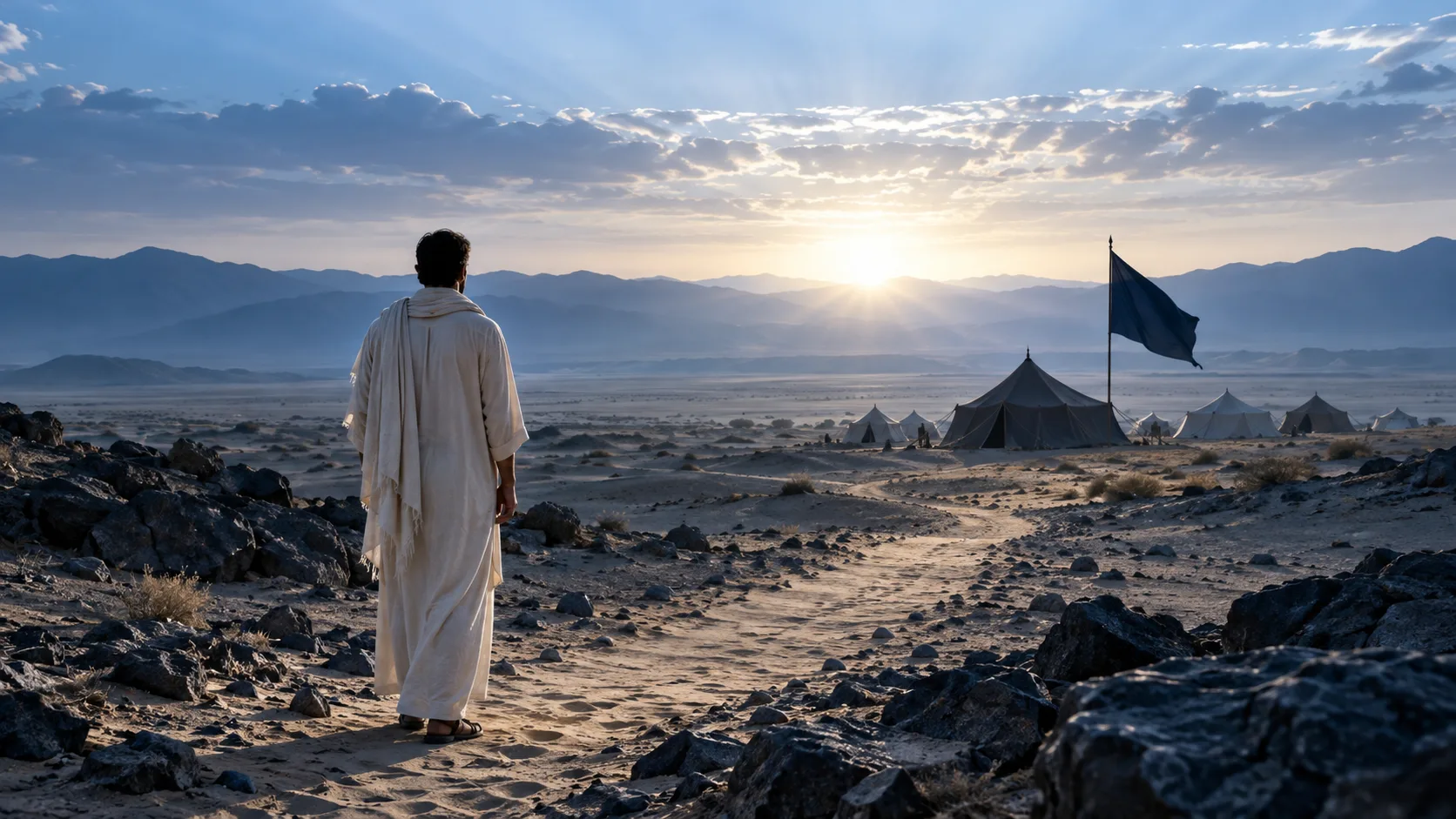
An eternal guide for humanity
It is truly a remarkable coincidence that both the beginning and the end of the Islamic year are marked by two great sacrifices, and both of these months hold immense significance in Islam. The first sacrifice was promised by Khalilullah (Saiyedna Ibrahim عليه السلام) and the second was completed by Abu Abdullah, (Imam Husain ibn Ali عليه السلام). Islam teaches us that life is surrounded by sacrifices—whether it is sacrificing our family, wealth, ego, or bad habits—for the sake of Allah.
One of the darkest chapters in Islamic history is that several prophets were martyred by their own people. History repeated itself once again—not with a prophet this time, but with the beloved grandson of the Prophet ﷺ, the delight of his heart, and his very image: Imam Husain ibn Ali (عليه السلام).
Karbala was not merely a battle or a war. It was a journey to distinguish truth from falsehood and to leave behind an eternal guide for humanity on how to confront oppression, remain loyal to Allah, stay faithful to the truth, and fulfill our responsibilities toward our people even in the midst of unimaginable hardship.
When we choose to follow Allah and walk the path of Haq (Truth), we often expect that Allah will bless us with everything we desire. Sometimes He does, but more often, the path of truth is filled with trials, hardships, and obstacles. Allah says in the Qur’an:
“And We will surely test you with something of fear and hunger and a loss of wealth and lives and fruits, but give good news to the patient.”
— Qur’an 2:155
Karbala teaches us not to place our trust in people merely because they claim faith, but to recognize true faith through sincerity and steadfastness. Husainiyat teaches us patience (sabr) throughout every stage of life. More importantly, Imam Husain (عليه السلام) taught us that once we recognize the truth, we must never bow before falsehood or evil, regardless of the consequences.
سر داد نہ داد دست در دست يزيد
حقا کہ بنائے لا الٰہ است حسین
(He gave his head, but never placed his hand in Yazid’s hand; Indeed, Husain is the very foundation of La ilaha illa Allah)
Imam Husain (عليه السلام), the leader of the youth of Paradise, did not merely sacrifice his own life and the lives of his family. He also taught us to recognize the “Kufis” of our own time and to be prepared for whatever consequences may come when standing for the truth. If your faith is sincere and your conviction is firm, you will find the strength to face every trial.
Perhaps that is why countless non-Muslim scholars, poets, and leaders have admired and quoted Imam Husain in their works. Figures such as Premchand and Mahatma Gandhi found inspiration in his sacrifice. His legacy transcends religion, nationality, and time, making him a universal role model for justice and human dignity.
Islam does not teach us to fight only against non-Muslims. Rather, it commands us to stand against every form of falsehood, oppression, and injustice, and to strive for what is right. Karbala is the greatest example of such a struggle and revolution. It teaches us never to fear tyrants or oppressors, even when we appear weak. Instead, we should remain steadfast, because ultimately we are accountable to Allah alone.
Sometimes standing against a zalim (oppressor) requires sacrificing not only your own life but even the lives of those dearest to you. This is the excellence of Islam to choose Azimah (the higher path of resolve and sacrifice) over Rukhsah (concession and ease).
Whenever we recognize the truth in our lives, we should support it and abandon falsehood. This beautiful lesson is reflected in the sacrifice of Hazrat Hurr (رضي الله عنه), who left the camp of Yazid and joined the side of Haq and Imam Husain (عليه السلام).
These teachings are not limited to the outward events of history; they are, first and foremost, lessons for our inner selves. The real battle is against the corruption within us—our ego, hatred, backbiting, lying, enmity, jealousy, and ill will toward others.
As my Master and Murshid Arif Billah Shaikh Abu Saeed says:
“Imam Husain A.S fought against evil and Yazid was ultimately disgraced. We, too, must continue to wage war against Yazid, for every human being carries a Yazid within.
The soul is like Husain, while the lower self (nafs) is like Yazid. To live in servitude to the nafs is Yazidism. The body's faculties are the army that has already fallen under the domination of Yazid—that is, the nafs. The nafs misuses this army and leads it into sin, just as Yazid misused his army in Karbala and compelled it to fight against Imam Aali Maqam.
Anger is Shimr. Desire is Ibn Ziyad. Intellect (aql) is Hurr—the one who has recognized and accepted the truth and understands that evil and disobedience ultimately lead to destruction. Yet it remains weak, overwhelmed by the assaults of Yazid's occupied army: the eyes, the ears, the tongue, the hands, and the other bodily faculties.
These three forces the nafs (Yazid), anger (Shimr), and desire (Ibn Ziyad) do not allow the intellect, represented by Hurr, to rise and prevail.” — Arif Billah Shaikh Abu Saeed
This teaching is a profound spiritual allegory: Karbala is not only a historical event but an ongoing inner battle. Imam Husayn symbolizes the purified spirit, while Yazid represents the ego (nafs). Shimr symbolizes uncontrolled anger, Ibn Ziyad represents worldly desires, and Hurr symbolizes the conscience or intellect that has recognized the truth but struggles to overcome the domination of the ego and its forces. The believer’s lifelong jihad is to liberate the faculties from the rule of the nafs so that the spirit of Husain may triumph within.
Comments
Comments are moderated. Please be respectful and stay on topic.